
William Wallace was a Scottish knight who played a vital role in the Wars of Scottish Independence. He is best known for leading his countrymen in the Battle of Stirling Bridge in 1297, where they defeated a heavily armed English army despite being outnumbered. Wallace quickly became a national hero and a symbol of Scottish resistance against English domination.
The Battle of Falkirk

However, Wallace's military success was short-lived. In 1298, he suffered a crushing defeat at the Battle of Falkirk, where his troops were outmaneuvered by the English cavalry and suffered heavy losses. Many of his men were killed, and he was forced to flee to the Highlands to avoid capture.
The Price on Wallace's Head

After the Battle of Falkirk, the English king, Edward I, issued a warrant for Wallace's arrest and put a price on his head. He was declared an outlaw and a traitor to the English crown. Anyone who captured him would receive a reward of 300 marks, a considerable sum of money at the time.
The Betrayal
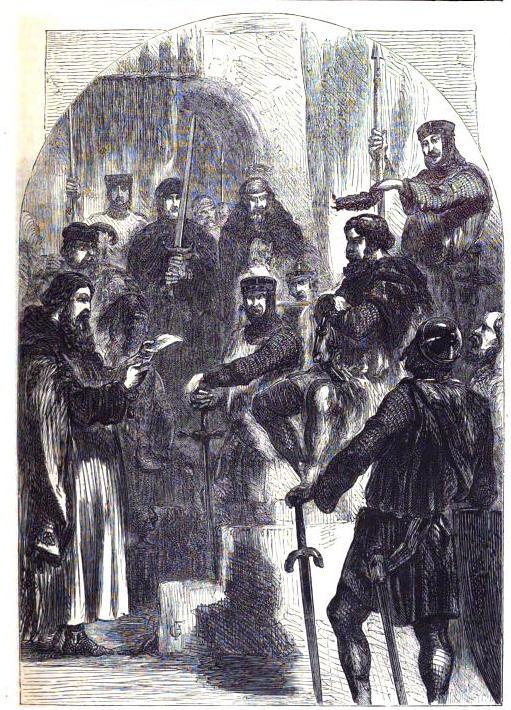
It was not long before Wallace was betrayed by one of his own men. Sir John de Menteith, a Scottish nobleman who had previously fought alongside Wallace, agreed to hand him over to the English in exchange for a pardon for his past crimes.
The Capture

On August 5, 1305, Wallace was betrayed by de Menteith and captured by the English near Glasgow. He was taken to London, where he was tried for treason and other crimes against the English crown. Despite his courage and defiance during the trial, he was found guilty and sentenced to be hanged, drawn, and quartered.
The Execution

On August 23, 1305, Wallace was executed in front of a large crowd at Smithfield, a public square in London. He was hanged until almost dead, then cut down, disemboweled, beheaded, and his body was quartered. His head was placed on a pike on London Bridge as a warning to other would-be rebels.
The Legacy of William Wallace

Despite his brutal death, Wallace's legacy lives on. He is still regarded as a national hero in Scotland and a symbol of the country's struggle for independence. His story has been retold in literature, film, and popular culture, most notably in the 1995 movie Braveheart, which won five Academy Awards, including Best Picture.
Conclusion
The capture and execution of William Wallace were a significant turning point in Scottish history. Although his military career was short-lived, his bravery and determination inspired his countrymen to continue fighting for their freedom. His legacy has endured for centuries, and his story remains an inspiration to those who seek to overthrow tyranny and oppression.