
Do you know the "I before E except after C" rule? It is a spelling rule that is often taught in schools to help students remember the correct spelling of words that contain the letters "i" and "e". The rule states that if the letters "i" and "e" are next to each other in a word, the "e" comes before the "i", unless the letters are preceded by the letter "c".
The Rule Explained
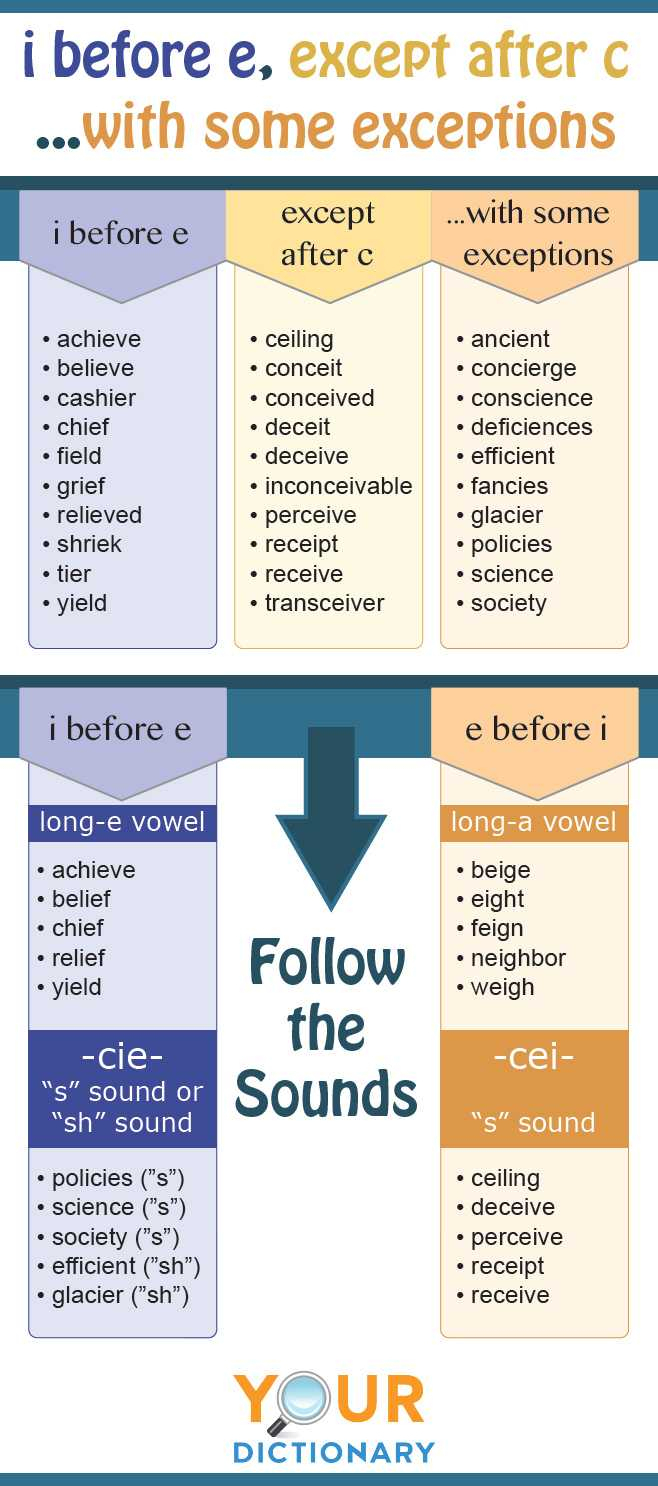
The full rule is "I before E, except after C, or when sounded as 'a' as in 'neighbor' or 'weigh'". It means that when the letters "i" and "e" appear together in a word, the "i" usually comes before the "e", unless the word is spelled with the letters "c" and "e" in that order.
The rule applies to many common words, such as "believe", "relieve", "siege", and "piece". In these words, the "i" comes before the "e" because there is no "c" before the "ie". However, in words like "receive", "deceive", and "conceive", the "e" comes before the "i" because there is a "c" before the "ie".
Exceptions to the Rule
Despite being a helpful rule, there are many exceptions to it. Some words don't follow the rule at all, such as "weird", "seize", and "height". In these words, the "e" comes before the "i" even though there is no "c" before the "ie".
Other words follow the rule only partially. For example, the word "science" has the letters "c" and "e" in that order, but the "i" comes before the "e". The same is true for words like "species", "ancient", and "society".
Other Spelling Rules to Remember
The "I before E except after C" rule is just one of many spelling rules that can help you become a better speller. Here are some other rules to remember:
- When a word ends in a "y", change the "y" to an "i" before adding "es" or "ed". For example, "cry" becomes "cries" and "tray" becomes "tried".
- When two vowels are together in a word, the first vowel is usually long and the second vowel is usually silent. For example, "boat" and "rain".
- When adding a suffix to a word that ends in a consonant, double the final consonant if the stress is on the last syllable. For example, "begin" becomes "beginning" and "prefer" becomes "preferred".
Conclusion
The "I before E except after C" rule is a helpful tool for spelling many words correctly. However, it is important to remember that there are exceptions to the rule, and other spelling rules to keep in mind as well. By practicing your spelling and following these rules, you can become a better speller and communicate more effectively.